KLE 85: An Unlimited Source of Capital

Even if you use ALL of your available Capital (including, partnering with the 3F’s), you won’t be anywhere near where you need to be in terms of acquiring sufficient Capital to reach your Number.
So, you need to find another source of capital, a virtually unlimited source …
Note: You need to be a Premium Member to view this content:[hidepost]
That’s where Debt steps in!
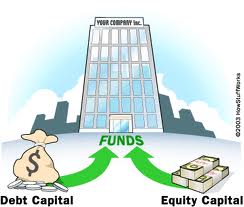
You see, Equity (that is cash that you and your partners put in) is Capital, but so is Debt i.e. money that you borrow.
It doesn’t seem right, but it is:
Consider a scenario where you and a partner each agree to put up $100,000 cash to buy a business; you both agree that it would be best to avoid loading up the business with interest expense, hence the need for cash.
Your share of the business is 50% – or $100,000 – of equity (assuming the business is worth exactly what you paid for it). You’ve sold your cars, drained your bank accounts, and cashed in your IRA to raise the cash, but (you hope) it was worth it.
What you don’t know is that your partner simply took a $100,000 Home Equity Line Of Credit (HELOC) against his house, effectively borrowing his entire $100,000 share!
But, it doesn’t matter; from the business ownership point of view, there is $200,000 of equity: you both put in $100k capital. Your partner will simply have to make arrangements to pay the interest from profits. And, you could choose to do the same.
So, what’s the difference if you both borrowed the $100,000 – outside of the business or inside – and the interest is paid after profits or before? None – possibly, other than tax – of course!
That’s why Debt (The Bank’s cash), Equity (your partner’s cash), and Cash (your cash) are all excellent sources of Capital.
But, the Bank’s cash is the best:
– It’s usually much cheaper than Equity or Cash, and
– It’s usually in far more plentiful supply than Equity or Cash.
Cost of Capital
Let’s say that your Growth Vehicle (KLE68) is to buy a Franchise, with a target growth rate of 30%. If the purchase price is $200,000 but you only have $100,000 cash right now, where do you turn? What happens if you find a partner?
As before, your proposed partner pledges $100,000 (either money he had or money he personally borrowed; it make no real difference to you, unless you believe that it’s money he can’t afford to lose).
Now, you each have 50% of the business, so you each share the profit stream: the business ‘returns’ 30% (before tax) p.a., so you earn $60,000 profit in the first year (an unlikely scenario for most businesses, especially in their first year), after reasonable salaries – or, $30,000 each.
$30,000 on your $100,000 is 30% … so far, so good.
However, instead of taking on a partner, let’s say that you stump up the $100,000 cash (as before), but borrow the other $100,000 from the bank, simply by refinancing your own home.
Now, you own 100% of the business!
In the first year, the business turns a $60,000 profit, but now you get to pocket it all (also, you probably pay a cheaper staff member instead of paying your partner the same salary that you take!). Of course, you have 6% interest to pay on the $100,000 that you borrowed from the bank, so your net profit is $54,000 (taxes aside).
The same Franchise, and the same $100k of your cash went in, but you improved your return from 30% to 54%, simply by taking The Bank as a ‘partner’ rather than your Partner.
So, the cost of Equity, in this case is 24% … Equity Capital is usually much more expensive than Debt Capital, so use it!
Access to Capital
Unlike you, the 3F’s (Family, Friends, Fools), and even private investors, The Bank has an almost limitless supply of cash. The trick is to get hold of it!
Being debt free and being rich are [almost] mutually-exclusive!
This is a pretty controversial view, yet it is [almost] impossible to become rich without using debt: debt to fund your business (working capital finance and/or leases on equipment and/or leases on vehicles, etc.); debt to fund your real-estate investments (fixed interest mortgages and/or interest-only funding); debt to fund your stock purchases (margin lending); etc.
Yet there is risk, which is why you may want unlimited funding, but it is The Bank that will hold you back. So, the only discussion that we need to have is how to get more funding, because The Bank will always make less of it available than you need.
Why?
As Debt increases, so does Risk … and, like it or lump it, banks are the best risk managers that you will ever ’employ’.
For example, compare the scenario where you buy one Franchise for $100,000 against the scenarios where you buy 2 for $200,000 or 4 for $400,000. Even though you have diversified somewhat by buying up to 4 businesses, what happens if there’s a serious product issue, and the Franchisor shuts down for good under a mountain of product liability law suits? You are solely liable for the entire $400,000, and the bank will pursue you for it.
Remember: When managed well, debt is good!
[/hidepost]
Further information on this critical source of Capital will be provided in the Bonus Modules in Business, Stocks, and Real Estate Investing …


